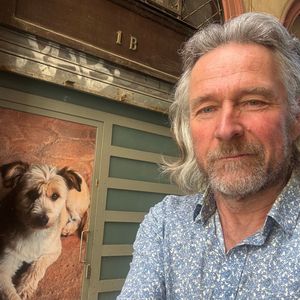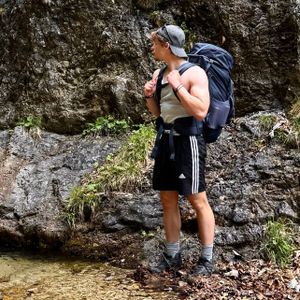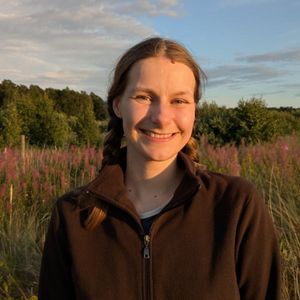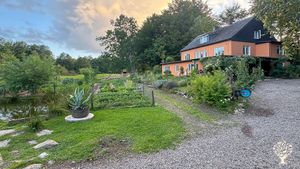
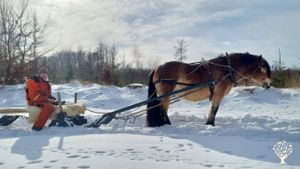
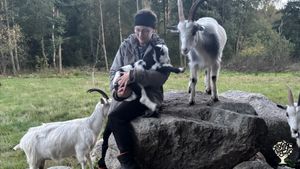
Krister and Kersti are running a small self-sufficient farm with two dogs, three cats, chickens, ducks, goats, sheeps, and pigs. Alongside farm life, we work on various projects together.
We are passionate about organic farming, sustainability, and new developments such as modular biomanufacturing. We enjoy sharing our knowledge and helping volunteers learn practical skills for a more self-reliant lifestyle.
We are fully self-sufficient in vegetables and grow a wide range of crops, including potatoes, beans, onions, carrots, tomatoes, berries, fruits, and herbs. We also produce our own eggs, meat, fish and dairy products.
Volunteers help with animal care, gardening, harvesting, slauther, fencing, watering, weeding, and general farm maintenance. A typical day begins with feeding and checking the animals, all of which are very tame, including a pig that enjoys walking on a leash. Depending on the season, tasks may also include fishing, repairs, construction projects, or helping neighbouring farms.
What we find most important is that you get to do the things that interest you and match your level of experience. We like to work together with you to find tasks that you genuinely enjoy, because work is always easier and more rewarding when you’re interested in what you’re doing. Rather than giving you a fixed list of jobs, we prefer to discuss the different possibilities with you and decide together what would suit you best.
If you enjoy hands-on learning, we can teach skills such as carpentry, masonry, window restoration, linseed oil painting, welding, blacksmithing, and the theory behind operating tractors and wheel loaders.
Heating with firewood can be a practical way to save money while living a more self-sufficient lifestyle.
When wood is burned properly, it can have a relatively small impact on the environment.
To make the most of your heating system and keep costs down, it is also important to seal your windows well and insulate your home properly.
Here, you can learn about the entire process and take part in every step—from selecting and cutting trees in the forest to splitting, stacking, storing, and drying the firewood.
Different types of wood need different amounts of time to dry, so learning how to prepare each kind is essential.
The way you burn the wood matters, too. Proper burning improves efficiency, reduces smoke, and helps protect your stove and chimney. We can show you how to do it safely and effectively.
We have access to hunting on our land. Meals are largely farm-produced, and we are happy to adapt to different dietary preferences.
You will have a private room with two beds, access to a kitchen, laundry facilities, bathroom, and shower, and beautiful views over the pasture and pond.
We speak Swedish, English, some German, and some Spanish. Krister volunteers on a biodynamic farm and enjoys learning about cultivation, while Kersti grew up in the area and knows the local community well.
We usually cook simple, traditional home-style food and enjoy preparing and eating meals together.
Since we have animals on the farm, some of the meat we eat comes from our own animals.
We also eat fish that we catch ourselves, as well as meat from hunting.
Farm life can sometimes be unpredictable. Occasionally, something unexpected may happen, for example if an animal becomes seriously ill or injured and needs to be slaughtered urgently.
In situations like these, we really appreciate having an extra pair of hands available to help, as these things naturally cannot always be planned in advance.
The most important thing for us is that everyone feels comfortable, that we help each other, and that we can enjoy everyday life on the farm together
The farm is surrounded by forests, hiking trails, and excellent opportunities for mushroom picking and outdoor life. The Skåneleden trail passes just a few hundred metres away.
Shops and services are available in nearby villages, and public transport can bring you close to the farm.
The local community is active, with lectures, shared meals, a choir, and a member-run pub open every Friday evening.
Read more
Learning opportunities
Vegetable farming
Poultry farming
Pig farming
Sheep or goat farming
Forestry
Cheesemaking
Meat processing
Vegetable or fruit preservation
Green Building
Mechanics / tools / technology
Methods or systems
Animal drafting
Biological pest control
Biodynamic agriculture
Holistic management
No-till farming
Permaculture
Host type
Self-sufficiency property
Former WWOOFer
8.5
Hectares
|
21
Acres